
Even more than was true of my previous post — “The Changing of the Same (In the First of Two Senses),”[1] the first of the two posts that constitute this current short series — to a very large extent this post consists of quotations from various sources. What is more, similarly to how the first section of that preceding post contained three citations from the Online Etymology Dictionary, so will I just below in this first section of today’s post give one such citation.
same (adj.): "identical, equal; unchanging; one in substance or general character," from Proto-Germanic [1]samaz" same" (source also of Old Saxon, Old High German, Gothic sama, Old High German samant, German samt "together, with," Gothic samana “togeth-er," Dutch zamelen "to collect," German zusammen "together"), from PIE samos "same," from suffixed form of root [1]sem (1) “one; as one, together with.”
That citation captures the rich ambiguity of the term same, such that it can be used to capture various meanings, including especially the two that are at issue in the two posts of this current series. In the very next section below, I will begin with a quotation from one of my own earlier posts, this one from a bit more than two years ago, put up on May 13, 2024.
* * *
A saying that is sometimes to be heard in meetings of Alcoholics Anonymous is that for alcoholics to give up drinking what is needed is not a change of anything, but rather a change of everything. That is, to recover from alcoholism, alcoholics must change their lives as a whole — their whole orientation toward and within their lives, affecting how they approach each and every new day, and make each and every new decision they are faced with making throughout every new day.
— “Changing Times, Changing Lives”
A change of everything in the sense at issue in the above quotation is very different from an exchange of one accumulation of things for another. It is not the replacement of a totality of objects for a different but “equivalent” totality of objects, in which all Lincolns become Cadillacs for example.
Rather, when an addict finally “bottoms out” in that addict’s addictive usage of some substance or process and finds an entirely new, “sober” way of life, no single thing or relationship is exchanged for any other “equivalent” thing or relationship, nor any collection of things and relationships exchanged for any other such collection. The addict “in recovery,” to use the standard phrase, does not have a new life. Rather each addict has exactly the same life that addict had all along, both before and after finding the way to recovery from addiction. Rather, the difference is that the addict in recovery has, in effect, been given at last eyes that can see that addict’s own life as such. And once that life has been at last thus experienced in its fullness, the addict in recovery can say joyfully say, along with Nietzsche’s Zarathustra:
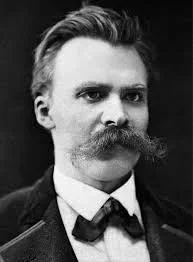
“Was that life? Well, then, once more!” [2]

Friedrich Nietzsche
* * *
All those who have been thus given at last the eyes to see constitute, not only in all such so-called “Twelve Step Groups” as Alcoholics Anonymous, Narcotics Anonymous, Nicotine Anonymous, Sex and Love Addicts Anonymous, Overeaters Anonymous, and so on, but also beyond all such groups and extending to the worldwide community of human beings as such.[3] Confining our attention to all human beings as such, we can truly say the worldwide and to-all-times-extending community of all humans is one in which no one can claim precedence over anyone else, but in which all are truly and radically equal in their absolutely and ineradicably individuality. Each one is just that one being each is, not interchangeable with any other just as radically individualized being, and all are the same in being utterly and eternally irreducible one to another.
Consequently, in that worldwide and time-wide community of all human beings no one anywhere ever will have the right — nor even the desire — to claim “ownership” over any “property” whatsoever. That world- and time-wide community of all human beings whatsoever will indeed share all things in common, just as the following passage from Christian Scripture[4] proclaims:
All the believers were one in heart and mind. No one claimed that any of their possessions was their own, but they shared everything they had
— Acts of the Apostles 4:32 (NIV)
Some eighteen-hundred year after that passage from the Acts of the Apostles was written, the following remarks appeared from a very different source, but also condemning the institution of “private property”:
With the abolition of private property [. . .] we shall have true, beautiful, healthy Individualism. Nobody will waste his life in accumulating things, and the symbols of things. One will live. To live is the rarest thing in the world. Most people exist, that is all. — Oscar Wilde[5]
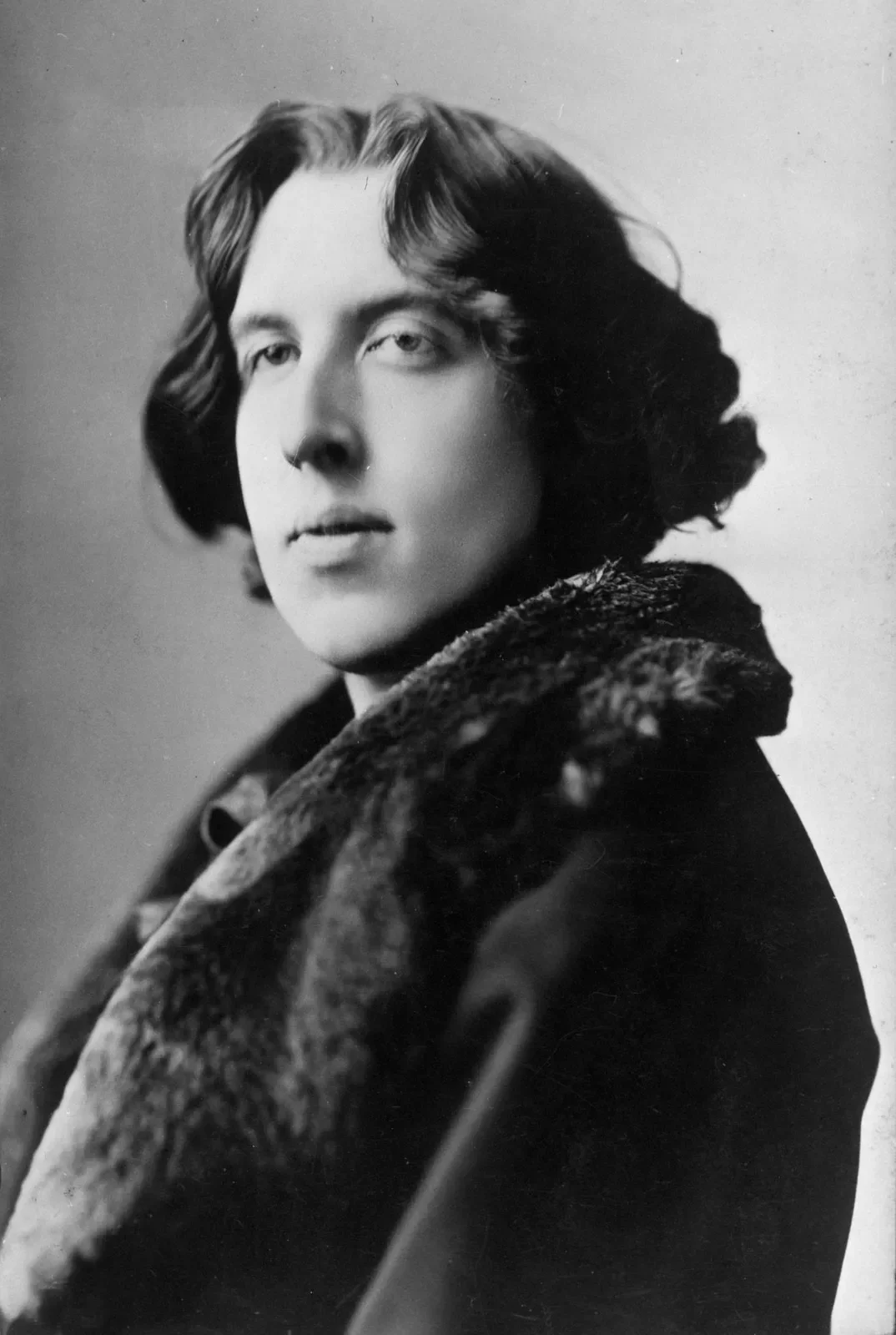
Oscar Wilde
* * *
The sun is new every day.
— Heraclitus (6th-5th century BCE)
This is a wonderful day. I’ve never seen this one before.
— Commonly attributed to Maya Angelou (1928-2014)
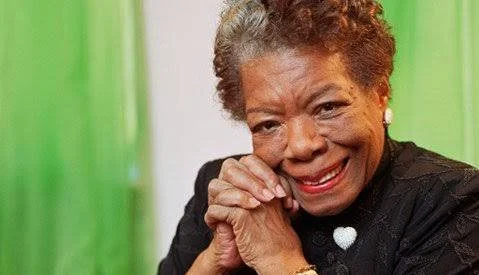
Maya Angelou
To be sure, as the above two quotes, this time separated by more than two millennia, attest no two days are ever the same, and each day it a gift to be gratefully accepted. May we all heed the wisdom of Heraclitus and Maya Angelou and live to the full each day anew.
[1] Posted on Monday, August 3, of this year, 2026.
[2] From Also sprach Zarathustra, “Dritte Teil“ (originally published in 1844).
[3] And even beyond humanity as such, to encompass all sentient beings as such, and even all non-sentient beings such as plants and extending, indeed, to everything whatsoever what “is” in any sense at all!
[4] I.e., the so-called New Testament.
[5]In “The Soul of Man Under Socialism” (originally published in 1891).



Quisque iaculis facilisis lacinia. Mauris euismod pellentesque tellus sit amet mollis.